とろみ調整食品(クリアタイプ)
Clear Thickener
L1L2L3L4
30秒溶解・透明・ダマなし
詳細を見る
Food Softener
外観を保つ・栄養を守る・安全に食べやすく
野菜・肉類など固形食品を、形・色・栄養を維持しながらIDDSIの安全レベルまで軟化させる革新的技術。嚥下障害のある方が本物の食事を楽しめます。
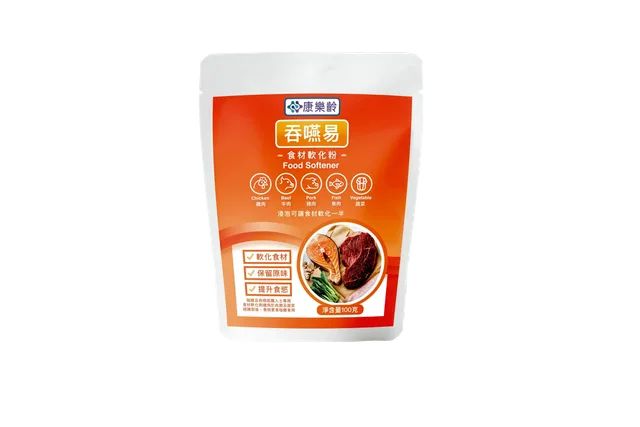
SeniorDeliの食品軟化素材は、食材本来の外観を保ちながら安全な食形態へと変換します。高齢者が見た目でも食欲をそそられる食事を提供できます。
The three-fold mechanism — freeze-thaw, enzymatic, and organic acid — works synergistically: freezing ruptures cell walls to allow enzyme penetration, natural proteases and cellulases break down structural proteins and fibres, and organic acids accelerate softening while maintaining safe acidity levels. The result is food that passes the IDDSI fork-droppability test at Level 5–6 with no change to the food's external appearance — the chicken wing still looks like a chicken wing.
Dissolve Food Softener in water at the recommended ratio and stir until fully dissolved.
Fully immerse the food in the softening solution. Soak for 30 minutes to 1 hour.
Place the soaked food (with the solution) in the freezer at -18°C or below for at least 8 hours, or overnight.
Take out of the freezer and thaw naturally in the chilled compartment (about 4-6 hours), or use the microwave defrost setting.
After thawing, cook as usual — steam, boil, or stir-fry. The food is now softened to 50% hardness with shape and flavour intact.
| IDDSIレベル | レベル名 | 使用量 | 備考 |
|---|---|---|---|
| Standard | Standard Softening | 5 g / 100 ml water | For most meats and vegetables |
| Deep | Deep Softening | 8 g / 100 ml water | For tougher ingredients (beef, root vegetables) |
* These are recommended dosages. Actual amounts may vary slightly with ingredient type, temperature, and individual needs. Start with the recommended dosage on first use, then fine-tune.
Natural Protease, Cellulase, Organic Acids (Citric Acid, Malic Acid), Maltodextrin
| Ingredient | INS / E-number | Function |
|---|---|---|
| Natural Protease | No E-number (naturally derived enzyme — papain/bromelain blend) | Breaks peptide bonds in meat and fish proteins, reducing hardness while preserving the structural silhouette of the food |
| Cellulase | No E-number (naturally derived enzyme) | Degrades cellulose in plant cell walls, softening vegetables and fibrous fruits without pureeing them |
| Citric Acid | INS 330 | Organic acid that lowers pH to activate enzymes optimally; also acts as a mild antimicrobial during the soaking stage |
| Malic Acid | INS 296 | Co-acid that moderates total acidity and contributes a clean, mild flavour profile; particularly effective for vegetable softening |
| Maltodextrin | INS 1400–1405 | Carrier — ensures even distribution of active enzymes across the soaking solution |
Source: Own R&D formulation using food-grade enzyme preparations; no artificial additives, complies with GB 2760 and IDDSI framework guidance.
Per 100 g · 5 g (standard dose per 100 ml soaking solution)
Most of the soaking solution is discarded after soaking; actual ingested amount per serving is far below these per-100 g figures.
| サイズ | バーコード | 説明 |
|---|---|---|
100g bag | 6973426190126 | Family trial size |
500g bag | — | Standard small care-home pack |
1000g bag | — | Hospital and large care-home pack |
Store in a cool, dry place (below 25 °C) away from direct sunlight and moisture. Once opened, reseal tightly and use within 3 months. Shelf life: 18 months from date of manufacture (unopened). Enzyme activity may decrease at temperatures above 30 °C — do not store in kitchens directly above heat sources.
30 minutes to 1 hour for most proteins and vegetables at the standard dose. Tougher cuts (beef shin, pork knuckle) benefit from 2 hours. Do not exceed 2 hours — over-soaking can cause the surface to become mushy.
At standard dosing the organic acids are diluted well below the taste threshold. If using the deep-softening dose (8 g/100 ml), a very faint tartness may be detectable on the surface — rinsing the food briefly after soaking eliminates this.
No — the enzyme activity is largely depleted after one use, and the solution contains proteins extracted from the food. Prepare a fresh solution each time.
Colour is well preserved in most cases. Some meats may lighten slightly on the surface (similar to a marinade effect) due to protein denaturation. Vegetables retain their natural colour after cooking.
Independent testing shows over 90% vitamin retention after the full freeze-soak-cook cycle. Protein content is slightly reduced on the surface but overall nutritional value is preserved.
The enzymes (papain from papaya, bromelain from pineapple) are denatured during cooking after softening. Patients with confirmed papaya or pineapple allergy should consult their dietitian before use.
No — the soaking solution cannot penetrate frozen food. Thaw the food fully before soaking. However, the freeze step in the protocol refers to freezing after soaking, not before.
Standard dose (5 g/100 ml) targets IDDSI Level 5–6. Deep dose (8 g/100 ml) can achieve Level 5 for tougher ingredients. It does not reduce food to Level 4 or below — use Food Gellant or Cold Gellant for lower-level requirements.
IDDSI Level 4
Transform dried plum into a soft, flavour-preserving gel using our cold gellant. No cooking required.
IDDSI Level 5–6
Prepare tender bok choy without a stove using our food softener powder — ideal for care homes without full kitchen facilities.
IDDSI Level 4–5
Transform pan-seared chicken breast into a tender, flavour-preserving soft meal using food softener powder. Suitable for those with chewing and swallowing difficulties. (Cantonese video)
Clear Thickener
30秒溶解・透明・ダマなし
Food Gellant
形を保つ・温めても崩れない・食欲を引き出す
Cold Gellant
加熱不要・滑らか・冷製料理向け
Mousse Soft Meal
即食・原貌保持・IDDSI第4級
Soft Meal Shaping Mold
食事の外観を再現・食の尊厳を守る